

Why StringKick Built a Duolingo for Guitar
StringKick Games is a "Duolingo for guitar": a growing collection of gamified exercises (six topics and hundreds of levels so far) that help you learn things like note names, intervals, scale degrees, chord construction, and train your ears. Instead of watching another YouTube video, you actually practice.
The exercises are organised into learning paths with levels that gradually introduce new material, keeping you challenged but not overwhelmed. Sessions can be short, 5 to 10 minutes, so you can practice on a break, on the bus, or whenever you have a few minutes.
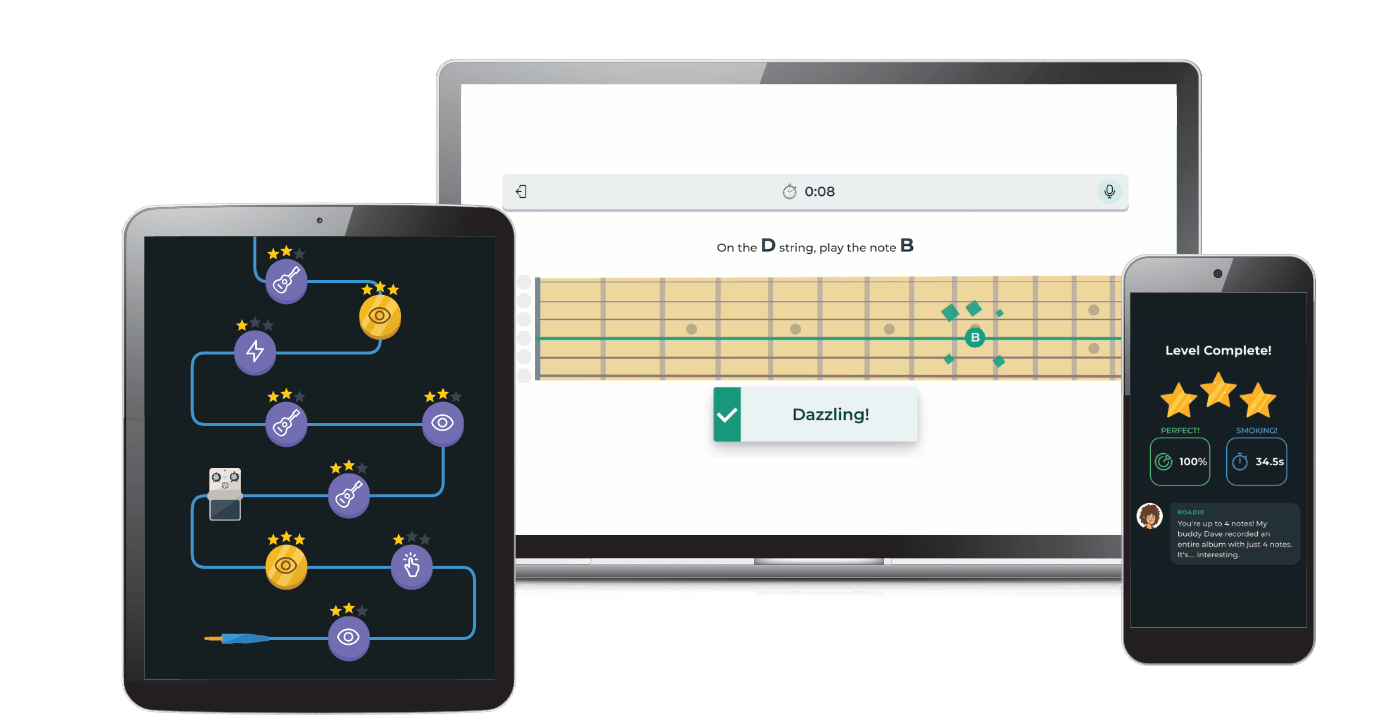
I thought long and hard before starting this project. It's not a simple project and I wanted to make sure it would really help people do what matters and enjoy their musical journey more. So in this developer note, I want to share the thinking behind why I built it, and where it's going next.
"I have been playing off and on for over a decade but never spent time on actually learning. My fretboard fluency and overall playing has improved tremendously from day 1 playing these games."
How does online learning hold guitarists back?
I'm just old enough to remember going into a library to prepare a school presentation. Back then, knowledge was scarce: you needed a book or another person to learn something.
The internet has changed that dramatically. Guitarists now have access to more useful information than ever, much of it free. Thousands of articles, tutorials, video lessons, PDF theory explainers for anything you want to learn.
But information by itself is not enough. "If more information was the answer, then we'd all be billionaires with perfect abs."
I've met many guitar players who get lost in this sea of information, clicking from one video to the next tutorial, feeling faintly productive without making real progress. It's easy to get trapped in "edutainment": watching and reading, but rarely putting in the practice that builds actual skills.
The internet has made it easier than ever to find information about music, yet harder to sit down and master it. Today, what holds back most guitarists is a lack of effective practice that turns knowledge into skill.
The 90-10 Practice Rule
From two decades of learning music and teaching music, I've come up with a rule to combat this abundance of information.
The 90-10 Practice Rule: spend 10% of your time learning new information, and 90% putting it into practice. Skills don't come from memorising, they come from doing.
Most online resources focus on the 10 percent: the explanations. With StringKick, I've always focused on the 90 percent: the practice.
For teachers, the 90-10 practice rule means you don't give students too much explanation. Instead, give them a small chunk of information and then help them put in the practice to master it.
My course Guitar Chord Bootcamp is a good example. It teaches notes on the low E string and barre chord shapes. You might think: I can just get a cheat sheet for that. But the idea is to spend two or three hours, once, and never need that cheat sheet again, because the knowledge then lives in your head, ready when you need it.
The course works like this: you learn a note, you practice it. You learn a shape, you practice it with the notes you know. Then you play a song with those shapes and notes in action. By the end of it, you can play bar chords all over the neck.
And it worked! One student, Eryk, put it this way:
"I have played guitar on my own for over 15 years and never had one lesson stick. Honestly, after this little course I feel like I have learned more about the guitar than I have in over ten years."
Why is practice-focused teaching hard (and rare)?
Focusing on practice instead of information has its challenges, I've found. There are two reasons much of guitar education is drawn towards explanation over practice:
1. It's harder to create. Building lessons that guide real practice takes far more time than recording an explanation. That's why, after years of creating courses, StringKick still covers only a fraction of what I could teach.
2. Edutainment is more exciting. Learning a new concept feels productive. Practice feels like work. YouTube videos get clicks because they deliver that quick hit of "I learned something", even when nothing sticks.
But though practice-focused learning isn't always as flashy and exciting, long-term, in terms of results, it blows edutainment out of the water.
My ear training courses, Make Your Ears Awesome, are a good example. They help you to figure out songs by ear, using your instrument. This won't get you overnight results and it's not always easy. But in a period of weeks to months, it can transform your musicianship.
This approach strengthens the connection between your 'inner ear' and your hands, teaching you to play music by ear. This takes practice and it can be hard work that you won't get from watching videos. But it's one of the most rewarding skills you can develop.
Learning from language apps
Many guitarists want to improve but don't always have the time, energy, or focus to sit down and practice. I understand this: people lead busy lives. (And it's no coincidence that some of my most dedicated StringKick members are retired.)
Language learning discovered this tension long ago. And interestingly, "edutainment" for languages isn't really a thing: people don't scratch their learning itch by watching YouTubers explain German grammar. (Though I'd love to be proven wrong about this.)
In language learning, the 90-10 practice rule (10% information, 90% practice) is obvious. We all intuitively understand that to speak a language, you need to remember words and internalise grammar. You have to practice.
What Duolingo and similar apps like Memrise, Falou and Rosetta Stone do well is break down the huge project of learning a new language into small, manageable steps. "Just learn these 5 words today." If you show up daily and follow instructions, you'll make progress.
Gamification is a big part of this. Instead of a boring list of lessons, you get learning paths with levels and stars. It aligns with how our brains work: we like small wins, and we like completing things.
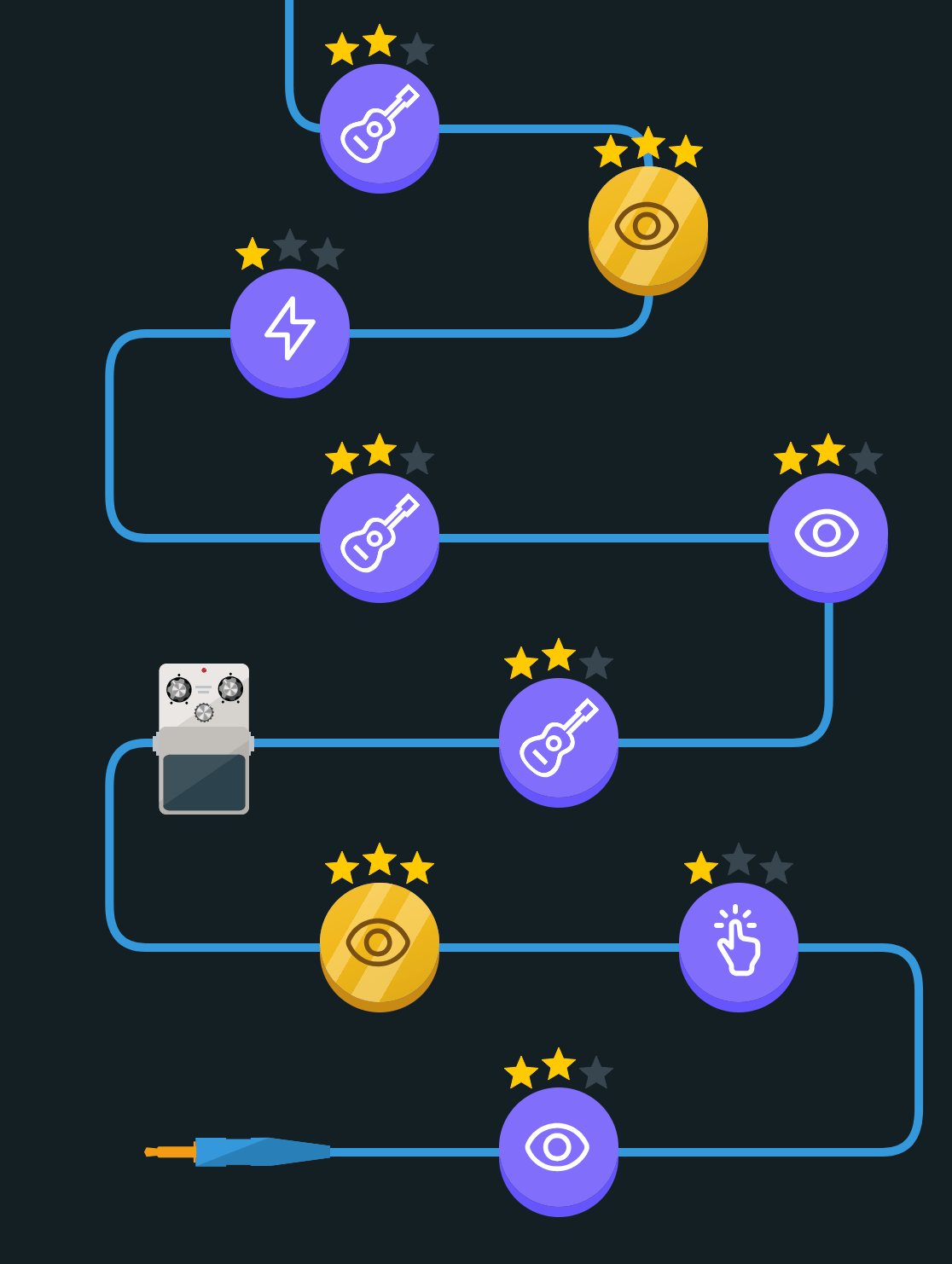
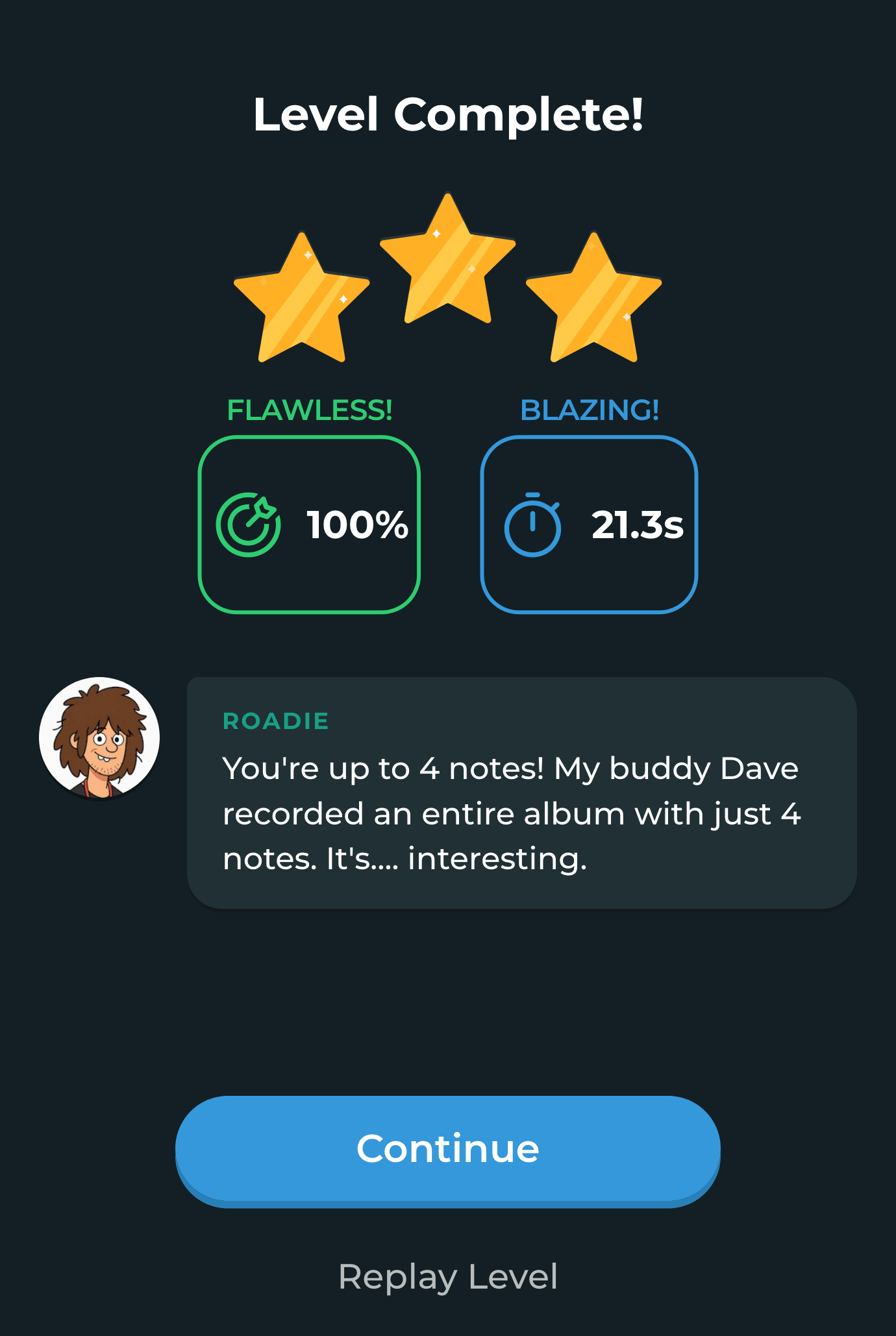
But there's something deeper going on. Good learning design keeps you in the "flow channel": challenged enough to stay engaged, but not so overwhelmed that you give up.
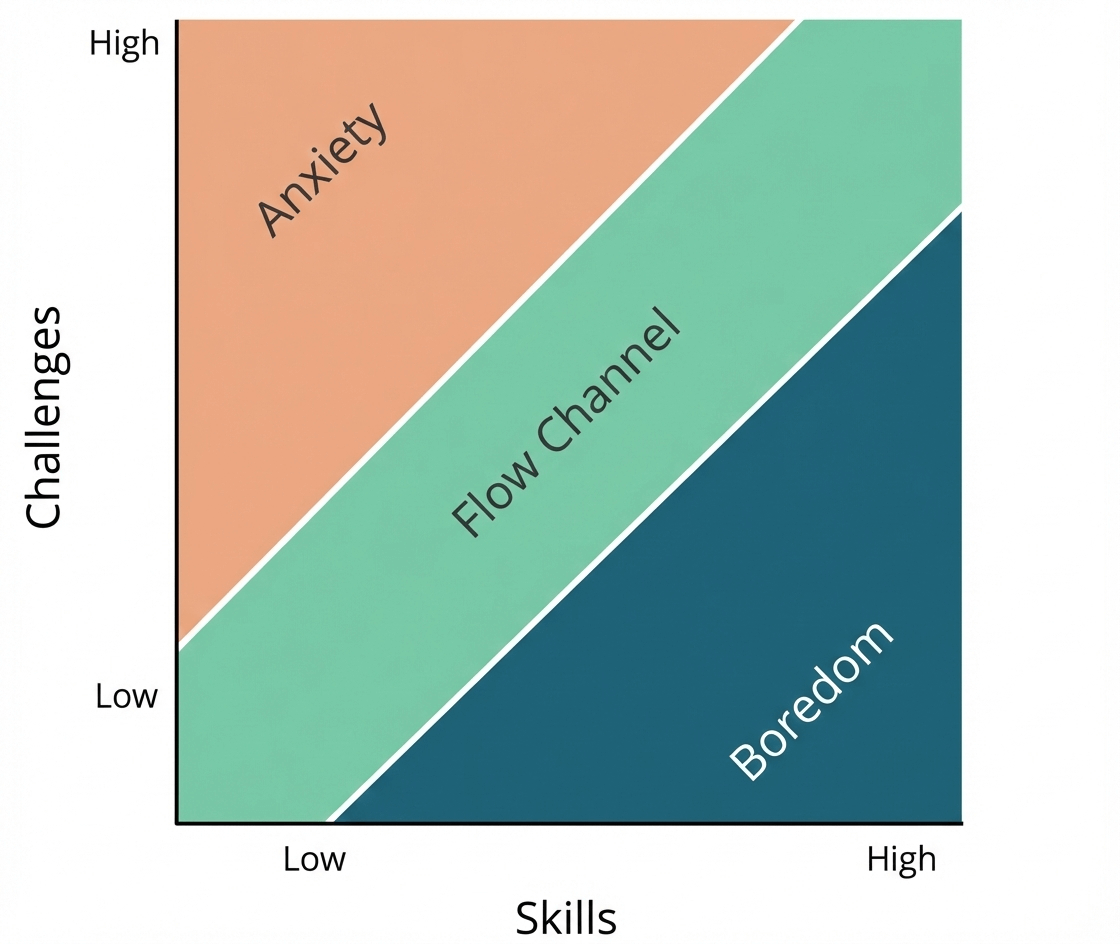
Too easy? You get bored. Too hard? You get anxious and quit. The sweet spot is in between, and that's what levelled learning paths are designed to hit.
A friend of mine put it perfectly: "Duolingo makes me do what I already want to do."
That's the goal with StringKick Games too. To help guitarists put in the practice to develop the skills they actually want.
How is StringKick Games different from Duolingo?
To achieve this, StringKick Games borrows many ideas from language apps. But we can't just copy them. Duolingo Music tried that and got mixed reviews. Like edutainment, it has the feel of learning without the substance. A common criticism is that tapping a tiny keyboard on your phone along to a song doesn't build skills that transfer to a real instrument.
So we need to think deeply about how music learning works, and what skills we're actually training. Music learning needs a different approach, so here's what StringKick Games is borrowing and what it does differently:
What StringKick Games borrows from language apps
- Immediate feedback (right/wrong)
- Spaced repetition for retention
- Progress paths that show where you're going and what you've achieved
- Bite-sized sessions (5-10 minutes, or longer of course)
- Daily streak tracking
- "Just do today's lesson" simplicity
- Learn when you're on the go
What StringKick Games does differently
- Real guitar in hand when possible (not just tapping screens)
- Sound as the primary interface (instead of just visual)
- Training the connection between ear and hands
- Focus on musical skills, from theory to ear training (instead of tapping a screen along to a song)
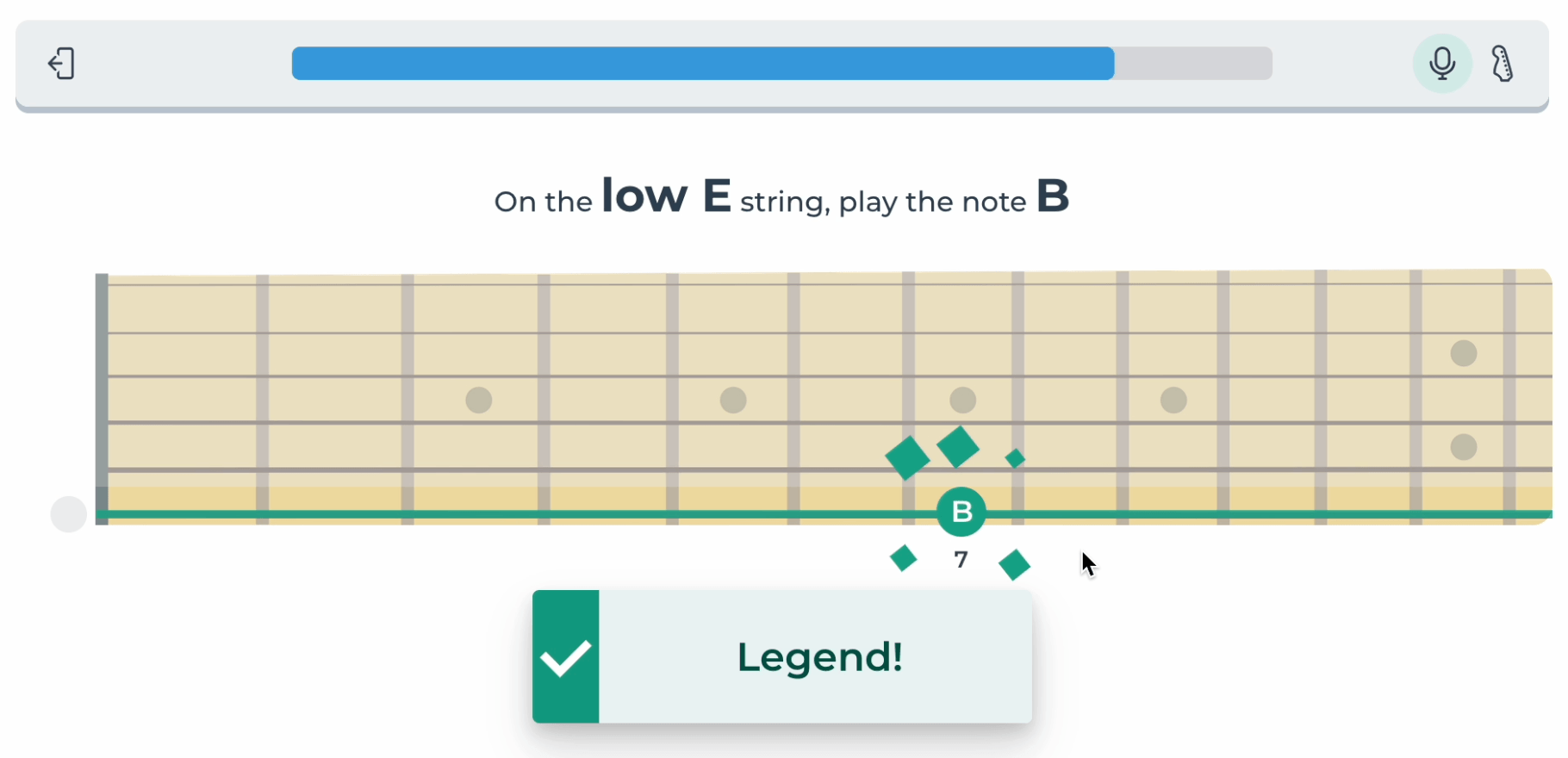
"These games are a lot of fun and somehow addictive. Perfect to play when I'm on the bus. I've already learned so much about fretboard note positions in such a short amount of time."
What we've built (and what's next)
In the past, access to information was the bottleneck for learning. Today, there's more than enough information. The challenge is turning it into skill.
I started StringKick because I wanted to help guitarists actually improve, not just feel like they're improving. StringKick Games is the next step: a place to build the core skills that make everything else on guitar easier, not by consuming more content, but by practising smarter. And by making it easier to show up and practice, even when life gets busy.