

The Guitar Skills You Need, Disguised As Games You'll Love
Build fretboard fluency in just 10 minutes a day through engaging games
Let's face it:
Some of the best things for your guitar playing can be confusing, frustrating, or just plain boring.
Memorizing note names.
Mastering intervals, chords, and scales on the fretboard.
Training your ears.
You already know you should be learning this stuff. But most guitarists skip it, because:
- A. Life is busy
- B. Practicing these skills can be dull or overwhelming
- C. You play guitar for fun after all
Ever tried learning the fretboard and given up? Then you'll recognise this cycle:
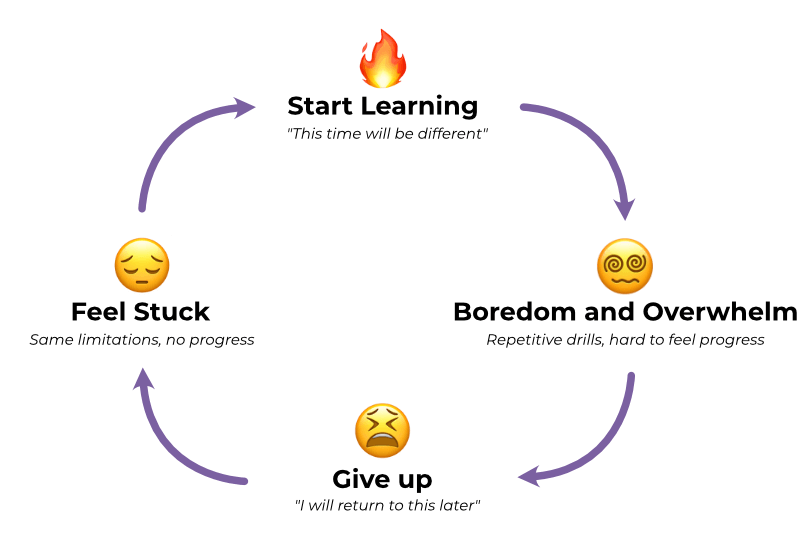
But Breaking This Cycle is Worth it!
Learning these "good for you, but not the most fun" topics really does pay off:
They make playing guitar easier, more fun, and more rewarding
They're key to playing by ear, improvising, writing songs, expressing yourself
They simply make you feel more confident in your playing overall
So, how can we make all those incredibly useful topics fun, engaging and convenient to learn?
How can we get the best of both worlds and make broccoli taste like apple pie?
That's why I built...
StringKick Games
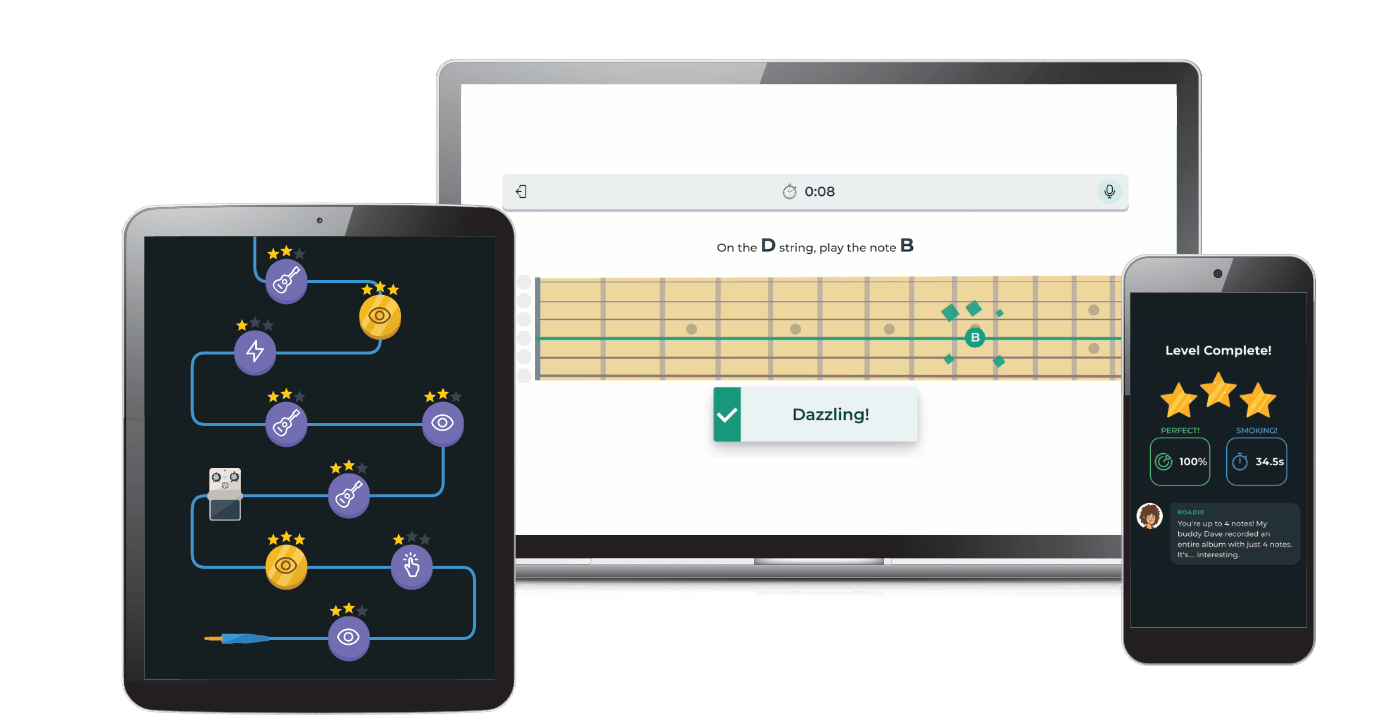
A collection of fun, gamified challenges that help you level up your guitar skills.
Here's How It Works
Addictive Games
Practice disguised as play. You'll lose track of time while building real guitar skills.
Simple learning paths
Clear, step-by-step paths that show you exactly what to practice next. Just beat the next level and see yourself progress. You can also create custom quizzes tailored to whatever you want!
Real guitar practice
Play the games on your guitar to lock your new skills into muscle memory. The app hears what you play and gives instant feedback. No guitar around? Just tap the on-screen fretboard instead!
What students are saying:
"I've been playing off and on for over a decade but never spent time on actually learning. My fretboard fluency and hence overall playing have improved tremendously from day 1 playing these games."
"I really enjoyed these games. They honestly helped me memorise the fretboard more than I thought myself capable of."
"Your course about intervals is exactly what I was looking for. Now, wherever I place a finger, I can find the other notes and intervals. This unlocks the entire fretboard. No more memorizing a hundred chord shapes!"
"These games are a lot of fun and somehow addictive. Perfect to play when I'm on the bus. I've already learned so much about fretboard note positions in such a short amount of time."
Get In Early

StringKick Games is live and growing fast. Six topics, hundreds of levels, and new games and features landing every month. You can start building real skills in the next five minutes.
But I'm nowhere near done. The roadmap is packed, and that's what launch pricing is about: the price goes up on 16 November, but join now and your rate is locked in.
Getting in early also means you help decide where this goes. I build this in close contact with members, so your feedback and ideas genuinely shape what gets built next.
Get Your Game Pass
Launch pricing ends 15 November. Lock it in and shape the future of StringKick Games.
Sampler
Get a taste of StringKick Games with our notename games
Full
The full StringKick Games experience
Teacher
Perfect for guitar teachers and music studios
Interested in using StringKick Games in your classroom? We're running a pilot — get in touch to learn more.
Try these Games Now
Ready to experience StringKick Games? Try these games that are already live and working. Click "Try it now" to play the full version!
Note Names
The ABCs of the fretboard. Learning the names of the notes gives you a great, initial grasp of how the fretboard works, simply because you learn where you can find the same notes.
Games:
-
Note Name Identifier
See a note on the fretboard and identify its name.
-
Note Name Player
Get a note name and string and play the right fret.
-
Note Name Collector
Get a note name, play every instance of it across the fretboard.
String Names
If you don't know your string names and numbers cold yet, this game is the fastest win on this page: a few quick sessions, and you'll make every tutorial, lesson, and video easier.
Try String Names now
Intervals
The building blocks of music. Learning intervals helps you see the underlying logic of music, and how seemingly random notes form things like scales, chords, arpeggios and more.
Games:
-
Interval Identifier
Get two notes on the fretboard, and tell what interval they are.
-
Interval Player
Get one note on the fretboard, and create the interval yourself.
-
Interval Collector
Get a note on the fretboard and an interval. Play every instance of that interval on the fretboard.
Chord Theory
Go from memorising shapes, to understanding them. Starting from open chords you already know, you'll uncover the 'recipe' behind every chord, so you can recognise, build, and modify any shape on the fretboard.
Games:
-
Chord Identifier
See a shape on the fretboard and name it.
-
Chord Builder
Get a chord name, tap the notes to build the shape.
-
Chord Modifier
Turn one chord into another: C major into C minor, A into A7.
-
Chord Tone Identifier
Find the root, third, fifth or seventh inside a shape.
-
Chord Ingredient
Break a full shape down into its chord 'ingredients', note by note.


Contextual Interval Ear Training
Most interval ear training teaches you to recognise intervals in isolation — but that's not how music works. These games train you to hear intervals within a musical context, so the skill transfers directly to real playing situations.
Games:
-
Interval Detective
A drone plays. You hear two notes and identify the interval between them.
-
Interval Singer
A drone plays. Sing the target interval and the microphone detects if you're correct.
Scale Degree Ear Training
This is about recognizing the unique 'mood' or 'character' of a note inside of a scale. It's one of the best ways to train your ears in a context that directly translates to real music.
Games:
-
Scale Degree Detective
A drone track plays. You hear a note from the scale. Tap it on the fretboard to answer.
-
Scale Degree Singer
A drone track plays. You're asked to sing a note from the scale and the microphone detects if you're correct.

What Games Are Coming Up?
There are so many great options for games to create. Here's a look at what I'm developing next and how each topic will help you improve.

Triads
Triads are small, moveable chord shapes that fit anywhere on the fretboard. They're how session guitarists voice chords in a band, how you play rhythm parts that don't step on the bass player's toes, and a great way to really understand how chords work on the fretboard.
Playing By Ear
Perhaps the most rewarding skill is the ability to play whatever you hear in your head. These exercises use real, musical phrases to build the connection between your head and your hands.
Games:
-
Melody Marvel
Hear a melody and play it back on guitar.

And More...
There are way more topics to cover, such as scales, chord progressions, modes, and advanced ear training. As a founding member, your ideas and suggestions will be super important in deciding what gets built and when!
Upcoming Features
I don’t just want to add more games, I also want to add features that tie everything together into a coherent learning system. Here’s how.
Native Mobile App
StringKick Games comes to the App Store and Google Play on Mon 9 Nov. One tap from your home screen, and your daily practice is right there.

Personal Progress Dashboard
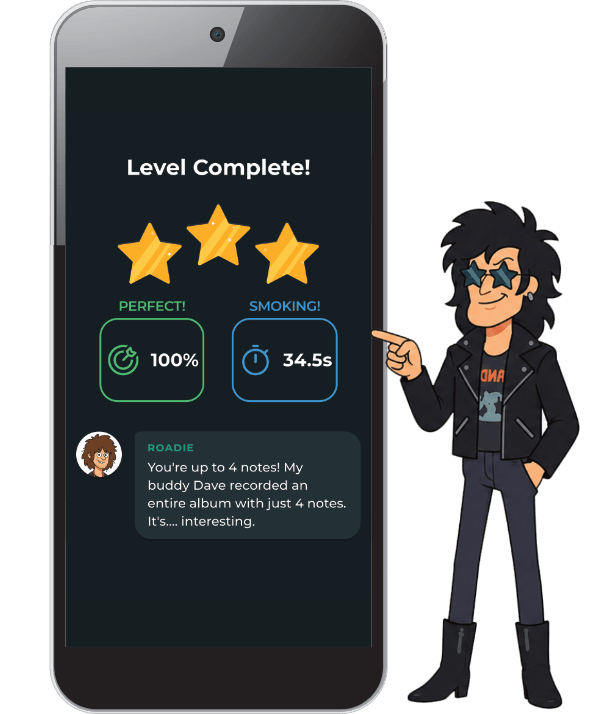
Get detailed insights into where you've improved and what to work on next. For example, you might discover you're slower with note names on the B string, allowing you to put in laser-focused practice on that string.
Fretboard IQ Scores
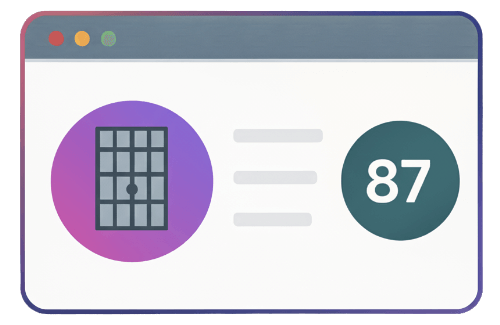
A series of tests give you a 0-100 score on several areas of your fretboard knowledge, such as note names, intervals, scales, chords and more. This gives you a clear picture of what area you need to work on most.
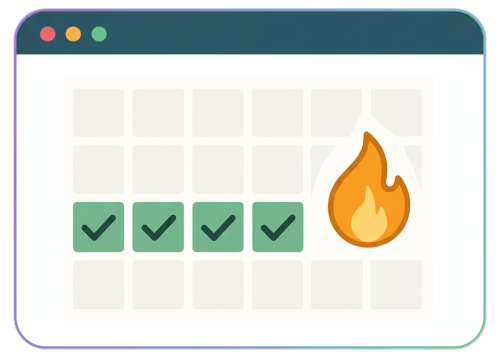
Practice Streaks
Approximately 100% of DuoLingo users I've talked to have told me why they love streaks, how long their streak is, and how they plan on maintaining their streak. (If you've not heard of this: DuoLingo is a language learning app featuring a green owl that guilts you into practicing every day.)
Daily Workout
Select the topics you want to work on, and you get a daily workout created for you that mixes these topics!
And More...
I have many more ideas, big and small, on the roadmap. As a founding member, your thoughts and feedback will be crucial in deciding what gets built next!

The teacher behind the games

Hi, My name is Just!
I've been teaching guitar for over 20 years, working with everyone from complete beginners to advanced players preparing for conservatory auditions.
Most people assume I'm a 'natural' in music. But here's what really happened: I started at 16 and became fascinated with how musical skills actually develop. How do you play music by ear? How does musical understanding grow? And how can you develop the confidence to play with freedom?
That journey of discovery became my strength as a teacher. I didn't just learn to play music, I learned how music learning works. (Spoiler: talent is practice in disguise.) I confess: I'm a bit of a nerdy teacher, with stacks of books at home about how we learn, what motivates us to learn, and how to make things sticky.
But I didn't just start StringKick to teach people guitar skills. My not-so-secret mission is to help you unlock your inner musician by developing your musicality. Why? Because it's the key to making your experience of music more fun, rewarding and profound.
The Road to StringKick Games
It Started With a Blog
That drive to help people develop true musicality really took hold right after I graduated music school. I started a blog called StringKick and my writing also appeared on sites like Guitar World, Alfred Music, TrueFire, and Harmony Central, reaching players looking for a deeper approach to learning guitar.
The 10/90 Practice Rule
But I quickly realized that knowing what to do isn't the same as actually practicing it. So I started building courses, based on the 10/90 Practice Rule: they would consist of max 10% explanation and over 90% practice. I created Guitar Chord Bootcamp, a course where you do the practice as the video gives you instructions.
Next, came "Make Your Ears Awesome", a series of courses where you figure out songs by ear, with hints and feedback along the way. And in Music Theory from Scratch, I replaced static diagrams with interactive tools to help guitarists understand topics like intervals, chord construction and scales.
The next evolution: Games
StringKick Games is where it all comes together: two decades of playing, teaching experience, learning psychology research, and coding skills. Real-time microphone recognition means your actual guitar becomes the controller. Gamification transforms repetitive drills into engaging challenges. It's my most ambitious and exciting project yet, focused on helping you master those tricky skills that can transform your playing.